





As you age, your risk factors for developing dry eye disease increase. The good news is that you can start making healthy lifestyle changes to improve dry eyes with aging. In this article, we will outline seven simple lifestyle changes you can make that will keep your eyes healthy for life.
Key Points
- See your eye doctor regularly to catch eye disease early.
- A healthy diet can improve symptoms of dry eye as well as protect you from other serious eye conditions.
- Simple lifestyle changes can keep your eyes healthy as you age.
Taking the First Step
Dry eye disease, also called dry eye syndrome, keratoconjunctivitis sicca, and ocular surface disease, is caused by inflammation and tear film instability. Dry eye symptoms may include burning, irritation, blurred vision, redness, and a sensation that something is in your eye.

One of the primary risk factors for dry eye disease is age. Other causes include meibomian gland dysfunction (MGD), prior eye surgeries, other eye conditions, auto-immune disorders, oral medications, and underlying medical conditions. Important lifestyle and environmental factors include smoking, excessive screen time, poor nutrition, low humidity and high winds.
Dry Eye Syndrome is Common in Aging Adults
Though it is possible to experience dry eye disease at any age, adults over the age of 50 make up the largest group of sufferers.1 In the United States, over 30 million adults are living with symptoms of dry eyes.
The majority of that group are women, as hormonal changes after menopause can contribute to dry eye.
In some cases, dry eye is an occasional nuisance, while for others dry eye disease is a chronic and constant condition. There are a number of factors that contribute to dry eye including:
- Low humidity or dry environment
- Health conditions such as rheumatoid arthritis, thyroid problems, Sjogren’s syndrome, diabetes, and others
- Air conditioning
- Smoking
- Contact lens use
- LASIK surgery
- Extensive use of computer or television screens
- Vitamin imbalance
- Skin diseases around the eye

If you have health conditions or lifestyle habits that affect healthy tear production and tear film stability, you are at higher risk of developing chronic dry eyes. This article is going to outline simple lifestyle changes you can make to improve dry eye disease with aging.
Lifestyle Changes to Improve Dry Eyes with Aging
Choosing to make a few lifestyle changes now to keep your eyes healthy can also improve the symptoms of dry eye as you age.
If you suffer from dry eye disease due to an underlying health condition, follow the treatment plan determined by your healthcare provider. In managing your existing health condition, you may also improve dry eye symptoms.
Treatment options for severe dry eye syndrome might include prescription medication, compounded eye drops, tear duct plugs, or in-office procedures.
Additionally, dry eye sufferers can implement the following lifestyle changes to improve dry eye disease with aging.

1. See Your Eye Doctor Regularly
Making time for regular eye exams with your eye doctor (ophthalmologist or optometrist) will keep your eyes healthy as you age. In addition to helping you manage dry eye disease, your eye doctor can test and uncover potentially serious eye conditions to begin treatment early.
The American Academy of Ophthalmology recommends a thorough eye exam when you turn 40.2 It’s around this age when your vision may begin to change, and your risk for eye disease begins to increase.
Your eye doctor will advise how often you should schedule future exams based on the results of this screening. If you have an eyeglass prescription, it’s important to keep it up to date to avoid accidental falls as you age.
Other Age-Related Eye Diseases and Conditions
Seeing an eye doctor for regular eye exams can help protect you against vision loss or blindness. In addition to dry eye disease, age is also a risk factor for the following eye diseases and conditions that your eye care professional can look for:
- Age-related macular degeneration (AMD), also called macular degeneration, is an eye disease that impairs your central vision. Your central vision helps you to see objects clearly and perform daily tasks such as reading, driving, and recognizing faces.
- Diabetic retinopathy can develop gradually in patients with diabetes. If you are diabetic, be sure to have a dilated eye exam annually to screen for this condition.
- Cataracts cause blurred vision that can progress over time resulting in significant reversible vision loss. If you have cataracts, see your eye care professional regularly. Your eye doctor will monitor changes over time and may recommend cataract surgery as a course of treatment.
- Glaucoma is a serious eye condition that can result in irreversible vision loss and blindness, if untreated. Having an annual dilated eye exam is important, as glaucoma often presents without symptoms or pain in the early stages.
2. Adopt a Healthy Diet for Healthy Eyes
Good nutrition for healthy eyes as you age starts with eating a diet rich in omega-3 fatty acids, antioxidants, vitamins, and minerals, and drinking lots of water. Not only is a healthy diet good for your eyes, it benefits your overall health and well-being.

Other essential nutrients for dry eye disease include vitamins A, B6, B12, C, D and E, coenzyme Q10, zinc, copper, lycopene, lutein and zeaxanthin. For a diet rich in these anti-inflammatory nutrients, choose fish, meat, whole grains, leafy vegetables, fortified cereals, seeds, fruits, and legumes.3
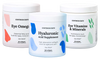
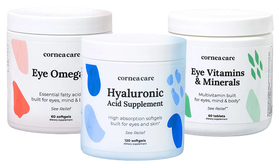
Include high-quality Cornea Care Eye Vitamins and nutritional supplements to fortify your diet and fill in any gaps. Essential fatty acids, specifically omega-3 fatty acids, may be beneficial for dry eye disease.
Cornea Care Triple Strength Omega 3 supplement is uniquely formulated to reduce inflammation and oxidation and promote visual, mental, and physical health.
3. Stop Smoking
Smoking can be as detrimental to your eyesight as it can be to the rest of your body.4 Smoking is a risk factor for heart disease, stroke, emphysema, and many other serious conditions.
Smoking increases your risk of developing dry eye disease, and also greatly increases your risk of developing macular degeneration5 and cataracts.6 These eye conditions can lead to severe vision loss or blindness.
To help protect your vision and keep your eyes healthy for life, never start smoking or take action to stop now.7
4. Protect Your Eyes from the Sun
Spending time in bright sunlight can cause dryness to your eyes due to faster tear evaporation. Excessive sunlight can also cause cataract formation and progression. You can protect your eyes with a wide brim hat and sunglasses that block both UVA and UVB rays.8
Never look directly at the sun, protect your eyes at midday, and when around sunshine reflecting off of water, snow, or ice.
Remember that damaging UV light can reach your eyes on cloudy days too.
5. Be Smart About Screens
Lifestyle risk factors for dry eye disease include extended hours staring at digital screens including smartphones, tablets, and computers. While we’re working on a computer, or watching a show on television, we blink less often than while doing other activities. The lower blink rate can cause dryness in your eyes.

An easy way to balance this effect is to take a screen break every 20 minutes, and look at something 20 feet away for 20 seconds (20-20-20 eye exercise). This habit can give your eyes a much-needed break throughout the day and prevent eye strain and dry eye symptoms.9
6. Practice Good Eye Care
There are several environmental factors that can worsen dry eyes, such as low humidity (dry climate or dry air), high winds, air pollution, and air conditioning.10
Dry eye disease can cause discomfort and affect your quality of life while increasing your risk of developing complications that damage your vision.
It’s important to prioritize dry eye treatment to prevent eye conditions as you age.
A simple treatment plan to improve dry eyes with aging:
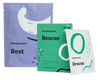
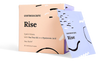
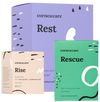
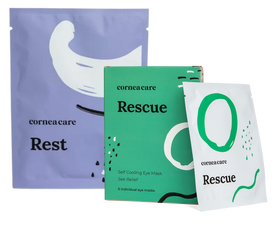
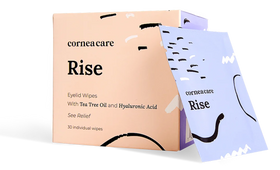
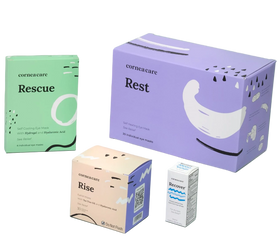
- Cornea Care Eyelid Hygiene routine daily including Cornea Care Rest self-heating warm compresses and Cornea Care Rise Eyelid Wipes
- Daily Cornea Care Eye Vitamins and Omega-3 supplement
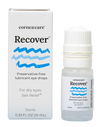
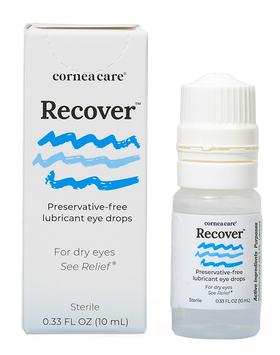
- Cornea Care Artificial Tears eye drops for lubrication of the surface of the eye
- Using a humidifier and air filter indoors
7. Stay Healthy Overall
Lifestyle changes that benefit your overall health can also improve your dry eye symptoms as you age. Stay physically active and maintain your weight within a healthy range.
Visit your healthcare professional annually to screen for high blood pressure and diabetes, and take steps to manage these conditions if you have them.11,12
Implementing a healthy diet will positively impact your general health, helping to protect you from serious conditions including eye disease.
Putting It All Together
Your risk factors for developing dry eye disease and other eye conditions increase as you age. Implementing the seven lifestyle changes we covered here can help keep your eyes healthy and lessen the discomforts of dry eye disease.
What’s Next
Learn to love your eyes! Read more eye health and wellness tips on our blog.
Sources
- NIH National Eye Institute. U.S. Department of Health and Human Services. “Dry Eye.” https://www.nei.nih.gov/learn-about-eye-health/eye-conditions-and-diseases/dry-eye. Accessed 19 August 2022.
- American Academy of Ophthalmology. “Get an Eye Screening at 40.” https://www.aao.org/eye-health/tips-prevention/screening. Accessed 19 August 2022.
- Baucom, Mary. “A Nutritional Guide for Dry Eyes.” Healthline, 2019, https://www.healthline.com/health/dry-eye/treating-chronic-dry-eye/nutritional-guide. Accessed 19 August 2022.
- Centers for Disease Control and Prevention. U. S. Department of Health and Human Services. “Vision Loss, Blindness, and Smoking.” https://www.cdc.gov/tobacco/campaign/tips/diseases/vision-loss-blindness.html. Accessed 18 August 2022.
- American Macular Degeneration Foundation. “Don’t Smoke. It Exacerbates Eye Disease.” https://www.macular.org/about-macular-degeneration/risk-factors/smoking. Accessed 18 August 2022.
- NIH National Eye Institute. U.S. Department of Health and Human Services. “Cataracts.” https://www.nei.nih.gov/learn-about-eye-health/eye-conditions-and-diseases/cataracts. Accessed 18 August 2022.
- NIH National Institute on Aging. U.S. Department of Health and Human Services. “Quitting Smoking for Older Adults.” https://www.nia.nih.gov/health/quitting-smoking-older-adults. Accessed 19 August 2022.
- American Academy of Ophthalmology. “The Sun, UV Light and Your Eyes.” https://www.aao.org/eye-health/tips-prevention/sun. Accessed 19 August 2022.
- Healthline. “How Does the 20-20-20 Rule Prevent Eye Strain?” https://www.healthline.com/health/eye-health/20-20-20-rule. Accessed 19 August 2022.
- American Academy of Ophthalmology. “Remedies to Reduce Dry Eye Symptoms.” https://www.aao.org/eye-health/tips-prevention/dry-eye-tips. Accessed 18 August 2022.
- NIH National Institute on Aging. U.S. Department of Health and Human Services. “High Blood Pressure and Older Adults.” https://www.nia.nih.gov/health/high-blood-pressure. Accessed 19 August 2022.
- NIH National Institute on Aging. U.S. Department of Health and Human Services. “Diabetes in Older People.” https://www.nia.nih.gov/health/diabetes-older-people. Accessed 18 August 2022.


