











What is Trichiasis?
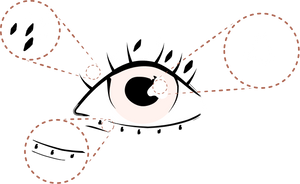
Trichiasis is a lid margin disorder in which the eyelashes or cilia that arise from their normal position are misdirected toward the ocular surface. Trichiasis frequently causes ocular surface irritation and commonly results from eyelid inflammation and scarring which disrupts the direction of growth of cilia follicles. The constant irritation can lead to eye pain, vision changes, corneal abrasions, or corneal ulcers. Trichiasis can be classified as either minor (fewer than 5 cilia) or major (5 or more cilia).
Key Takeaways
- Trichiasis is a lid margin disorder where eyelashes are misdirected.
- Trichiasis may cause irritation, inflammation, or scarring of the cornea.
- The common symptoms of trichiasis are eye pain, foreign body sensation, and redness.
Understanding Trichiasis
The eyelids are essential for the protection of ocular structures and tear film distribution. The structure of the eyelid can be broken down into two layers, the anterior and posterior lamella. The posterior lamella includes the tarsal plate, meibomian glands, and conjunctiva. The anterior lamella includes skin, orbicularis muscle and cilia (eyelashes). There are approximately 100-150 cilia in the upper lid and 50-75 cilia in the lower lid. Trichiasis may be caused by inflammation and scarring of the eyelash follicles.
Risk Factors for Trichiasis
The eyelashes are typically directed away from the eye. Factors that cause misalignment of the eyelashes to contact the cornea or conjunctiva can cause trichiasis. Women are four times more affected than males. Risk factors for the development of trichiasis may be inflammatory, infectious, traumatic, anatomic, or topical ocular glaucoma medications.
Trachoma is the leading infectious cause of blindness worldwide and is the eighth-commonest blinding disease. Trachomatous trichiasis is the result of multiple childhood infections with Chlamydia trachomatis resulting in chronic inflammation and scarring of the tarsal conjunctiva, called the Arlt’s line.
Trichiasis Symptoms
The symptoms of trichiasis may include:
- Eye pain
- Foreign body sensation
- Red eye
- Tearing
- Vision changes
- Photophobia
Diagnosing Trichiasis
A diagnosis can be made on eye examination. Findings may include mal-positioned cilia, entropion of the upper and/or lower eyelids, conjunctival injection, superficial punctate keratopathy, corneal abrasion, keratitis, keratinization, or blindness.
Trichiasis Treatment
Several options exist for managing trichiasis with the purpose being elimination of deviating lashes and improvement of patient comfort. Management is dependent on the underlying pathophysiology, the extent of trichiasis, and the type of lashes affecting the globe. Temporary measures may include eye lubricants, contact lenses, and the epilation of lashes. Surgical treatments are initially successful, but long-term results are poor with frequent recurrences. Definitive trichiasis treatments include bipolar electrolysis, radiofrequency ablation, cryotherapy and laser ablation, and surgical procedures.
Sources
Ferreira IS, Bernardes TF, Bonfioli AA. Trichiasis. Semin Ophthalmol. 2010 May;25(3):66-71. doi: 10.3109/08820538.2010.488580. PMID: 20590415.
Kirkwood BJ, Kirkwood RA. Trichiasis: characteristics and management options. Insight. 2011 Apr-Jun;36(2):5-9. PMID: 21717925.
Srinivasan, A, Kleinberg, Trichiasis: Lashes Gone Astray. Review of Ophthalmology. Published May 5, 2015. Retrieved from: https://www.reviewofophthalmology.com/article/trichiasis-lashes-gone-astray
Trichiasis. AAO Wiki. Retrieved October 16, 2022, from https://eyewiki.org/Trichiasis#cite_note-kostopoulou1-1
